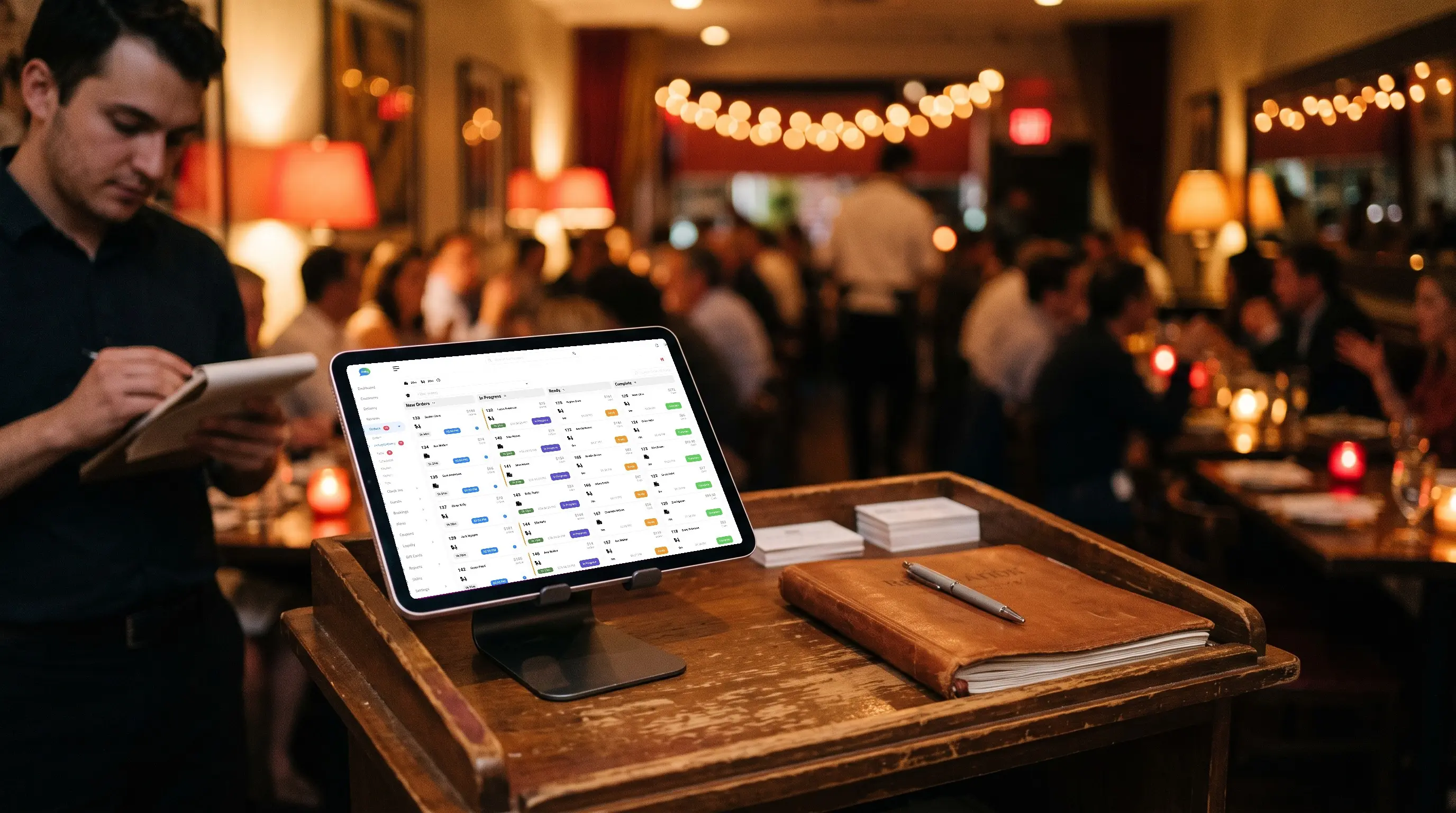
Tuesday feels slow, so you run 20% off Tuesday. Except last month’s numbers, if you’d looked, show Tuesday was your third-busiest night — it’s Wednesday that’s been quietly bleeding covers for six weeks. You just discounted a night that didn’t need it, trained regulars to expect a Tuesday special, and left the actual problem untouched. That’s not bad instincts. That’s just instincts working with the wrong information.
Why gut feel gets the timing wrong
“Slow” is whatever night stuck in your memory from the last time you happened to be on the floor watching it. It’s shaped by one bad Tuesday six weeks ago, not by the pattern across the last three months. Run enough promotions on gut feel and you end up doing one of two things: discounting nights that were already going to be busy anyway — pure margin given away for nothing — or missing the actual soft period entirely because it never felt as dramatic as the night you remember.
The same blind spot shows up below the night level too. A nightclub might know Thursday underperforms Saturday, but not know which promoter’s crowd actually spends versus which one just fills the room on free entry. A food truck might sense a market is “quieter lately” without knowing whether it’s the location, the day, or the time slot that’s actually the problem. Gut feel is rarely wrong about the big picture — it’s wrong about the specific lever, and the specific lever is what the promotion is supposed to pull.
What actually needs to happen
Find the slow period in the data, not the memory
Reports that finalise sales by session the moment you close — not a spreadsheet stitched together on Sunday — show exactly which night, which hour, which day of the month is genuinely underperforming. Once you can see it, you stop guessing, and you stop discounting nights that were fine on their own.
Aim the offer at the people who actually need the nudge
Customer segmentation groups your audience by behaviour — VIPs, lapsed, first-timers, big spenders — so a win-back offer goes to customers who’ve actually drifted, not to the regulars who were coming Friday regardless of any discount. A blanket promo sent to everyone is just a blanket discount on revenue you already had.
Send it where it’ll be seen, and check what it actually did
A campaign sent by WhatsApp, SMS, Messenger or email to the right segment, with ad tracking linking the order back to the campaign that prompted it, closes a loop a paper flyer never could. You find out whether the promotion earned back its own discount, instead of assuming it did because the room looked fuller that night.
Look one level below “which night”
Reports broken down by item and session don’t just show that Wednesday is soft — they show whether it’s soft across the whole menu or just the mains that stall, and whether a nightclub’s quiet Thursday is a day problem or a promoter problem. Ad tracking answers the second question directly, linking spend back to whichever promoter or campaign actually brought paying customers versus a crowd that came for a free-entry list and left after one round.
Run it twice, on purpose, before you trust it
One good Tuesday doesn’t prove anything — it might have been the weather, a local event, or luck. The point of tracking a promotion is being able to run it again next month and check whether the same segment responded the same way, rather than treating one good night as a permanent strategy.
Every discount is a bet — data just lets you check it
Running a promotion on gut feel isn’t wrong because gut feel is worthless. It’s wrong because you never find out if you were right. The fix isn’t more promotions, it’s fewer, better-aimed ones, checked against what actually happened last time — so the next one is a slightly better bet than the last, instead of the same guess wearing a new flyer.