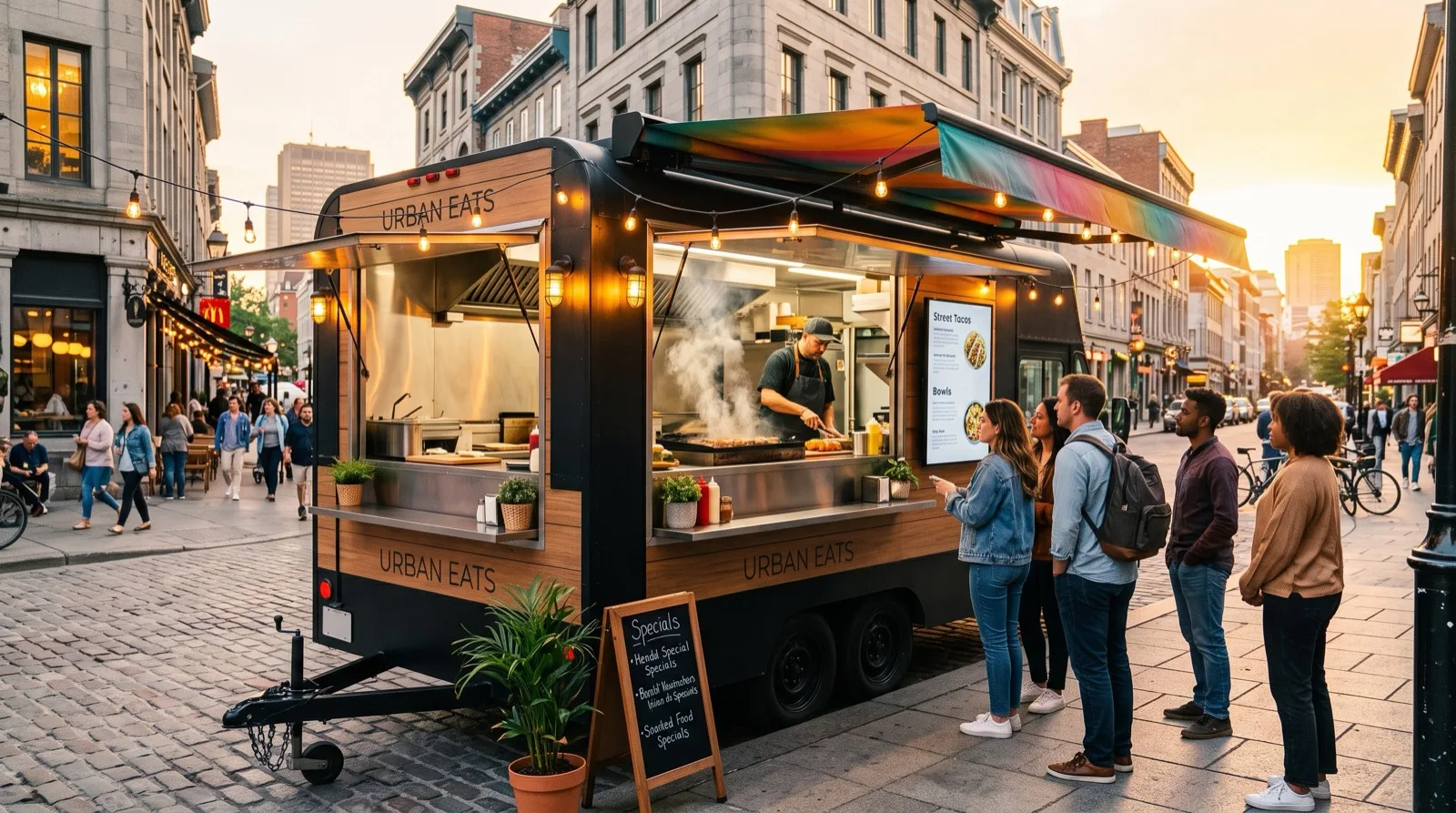
Saturday, 10:45am. You’re set up at Carriageworks with a full tank of gas and a menu ready to go, and for the first twenty minutes there’s no line — not because people don’t want what you’re selling, but because half your regulars don’t know you’re here today instead of at the markets across town. By the time word spreads through Instagram stories and word of mouth, you’ve lost the best part of the morning rush.
Why posting on Instagram and hoping isn’t enough
An Instagram post assumes someone opens the app, scrolls to your post specifically, and remembers to act on it before the algorithm buries it under everything else posted that hour. That’s three points of failure for something as simple as “we’re here today.” Regulars who would absolutely show up for lunch have no reliable way to find out you moved — so they default to wherever they know for certain they can get food, and that’s rarely a truck whose schedule changes daily.
The truck isn’t the problem. The announcement channel is — because right now it depends on the customer doing the work of checking, instead of the message reaching them.
What actually needs to happen
Build the list before you need it
Every QR order captures the customer directly — not through a marketplace, not through a follow you’re hoping they see, but as your own contact. That’s the list an Instagram post can never build, because it doesn’t depend on the algorithm showing anyone anything.
Send the location, don’t post it
The single highest-leverage message a food truck sends is “we’re at Carriageworks Sat 11am,” landing directly in a customer’s inbox the night before — not buried in a feed, not hoping for a share. It’s a direct message to people who’ve already bought from you, sent on a schedule you control, not one a platform decides.
Make the message do more than announce
A location alert that also lets someone act on it works harder than a plain heads-up. Pairing the announcement with a way to order ahead for pickup means the customers who saw the message aren’t just aware you’re there — they’re already first in line before you’ve even opened the hatch. Trucks running this see roughly +28% repeat visits off the back of a simple broadcast, because showing up got easier for the customer, not just more visible.
Let the AI handle “where are you today?”
The same question arrives on WhatsApp, Instagram and Messenger every single trading day, usually from someone who’d order immediately if they just got an answer. Asky’s AI answers instantly, in your tone, across every channel — so a customer asking at 11:58am still gets a real answer instead of a message you see after the lunch rush is over.
Know which locations are worth announcing loudly
Not every pitch deserves the same broadcast effort. Without order data tied to each event, deciding where to show up next month is a guess dressed up as a booking calendar. Sales reporting broken down by location and event shows which Saturday market actually converts into revenue and which one is a quiet drive for a handful of sales — so the locations you’re putting real marketing effort behind are the ones your data says are worth it, not just the ones on the calendar longest.
Don’t let a shared pitch bury your announcement
Markets and festivals often put several trucks in the same car park, which means “we’re at the showground” isn’t actually specific enough — customers still need to know which stall is yours once they arrive. Each truck gets its own QR code, so the location message and the ordering experience point to the same place: your truck, not whichever one happens to be first in the row.
The queue was never the real signal
A quiet first twenty minutes at a new location feels like a demand problem. Usually it isn’t — it’s a reach problem, solved the moment your regulars actually get told where you are instead of needing to go looking for it. Fix the announcement and the queue you were waiting for at 10:45 shows up closer to 10:46.